

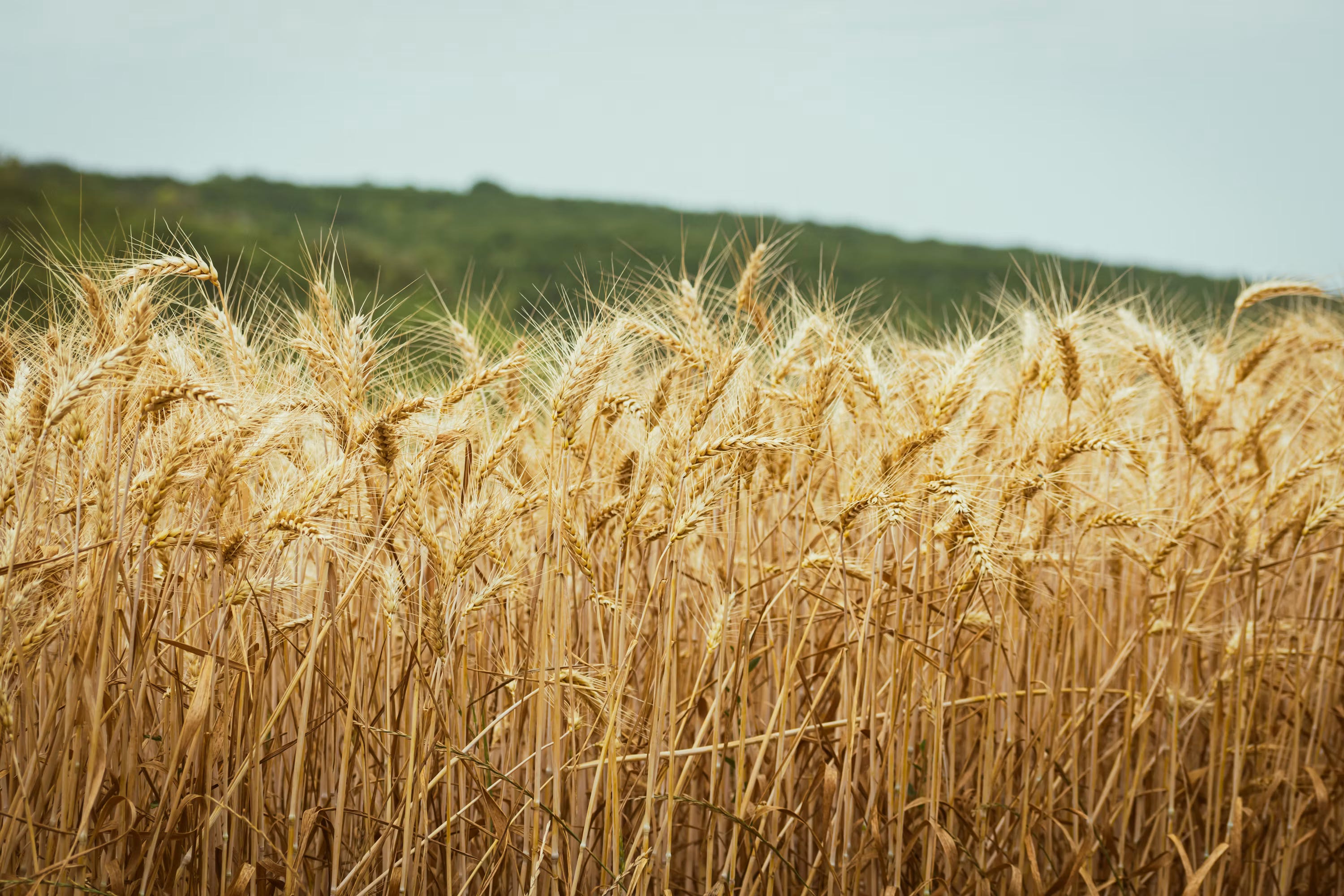
There is something about late summer that always feels a little different to me.
The days are still warm. The garden is still growing. Bees are still moving from flower to flower, and everything outside can look completely alive and full. But underneath all of that, there is the smallest hint that the season is beginning to turn.
The evenings seem to arrive a little sooner. Gardens start giving us more than we can sometimes keep up with. Fields begin changing from green to gold. Apples grow heavier on their branches, and suddenly I find myself thinking about bread, herbs hanging to dry, jars lined up in the kitchen, and all of the cozy things that come with autumn.
For our ancestors, though, this time of year was about far more than looking forward to cooler weather.
Harvest could determine whether a family or community had enough food to survive the months ahead. A good harvest meant security. A poor one could mean hunger and hardship.
It makes sense, then, that harvest season became surrounded by so many traditions, rituals, celebrations, and superstitions.
And some of them are still quietly with us today.
When the Harvest Meant Everything
It can be difficult to imagine just how important harvest time once was.
Today, most of us can walk into a grocery store in January and buy strawberries, tomatoes, bread, herbs, and produce that would have been completely unavailable to our ancestors at that time of year.
Historically, life followed the seasons much more closely.
Grain needed to be harvested at the right time. Fruit and vegetables needed to be gathered, dried, stored, fermented, or preserved. Herbs were collected. Animals were prepared for the colder months. Food stores had to last through winter and sometimes well into the following spring.
The harvest wasn’t simply one event, either.
Different crops ripened at different times, creating a long season of gathering that could stretch from late summer well into autumn.
Because so much depended on it, harvest became woven into community life.
People worked together. Meals were shared. Celebrations marked the completion of difficult work. Prayers and offerings expressed gratitude for what the land had provided.
And, naturally, folklore grew alongside all of it.
The First Sheaf
The beginning of the grain harvest could be treated as something special.
The first grain cut from a field sometimes carried symbolic importance, and traditions surrounding the first fruits of the harvest appear in many different cultures.
The idea behind these customs is easy to understand.
The first successful gathering of food meant that the harvest had truly begun.
It was proof that the land had produced again.
In some traditions, the first portion of a crop might be offered, blessed, shared, or prepared as part of a special meal. The exact customs varied widely depending on place, time, and religious tradition, but gratitude was often at the center of them.
There is something I really love about that idea.
Before rushing forward to gather everything else, there was a moment to acknowledge the first return.
It feels very different from the way we often experience abundance now, when having more can quickly become ordinary.
The Mystery of the Last Sheaf
If the first grain represented the beginning of harvest, the last grain could hold an entirely different kind of meaning.
Across parts of Europe, particularly in farming communities, folklore sometimes imagined a spirit or presence living within the grain.
As workers moved through a field cutting the crop, that spirit was believed to retreat farther and farther into the remaining grain.
Eventually, only a small patch remained.
The final sheaf could therefore become incredibly significant.
Depending on the region, this spirit might be described through figures associated with the corn, grain, animals, or an old woman. Customs varied considerably from village to village, which is one of the things that makes harvest folklore so interesting.
There wasn’t one universal harvest tradition.
There were hundreds of local versions.
The final bundle of grain might be decorated, carried home ceremonially, preserved, or shaped into a figure.
And that brings us to one of the most recognizable harvest traditions today.
Corn Dollies and the Spirit of the Grain
Corn dollies are probably one of the first things many modern witches think of when we talk about harvest folklore.
Despite the name, these weren’t traditionally made from the corn we usually picture in America.
In Britain, the word “corn” historically referred more broadly to cereal grains such as wheat, barley, oats, or rye.
Straw from the harvest could be woven into decorative shapes that became known as corn dollies.
One popular interpretation is that the spirit of the grain could remain within the final sheaf during winter. The woven figure provided a symbolic home for that spirit until planting returned.
In some traditions, part of the previous harvest might eventually be returned to the fields.
The symbolism is beautiful.
The harvest doesn’t truly end.
Something is saved.
Something sleeps.
Something returns.
Today, corn dollies are often made as seasonal decorations or placed on autumn altars. Some people create them as part of Lammas or harvest celebrations.
Even when the original beliefs have changed or disappeared, the image of woven grain still carries that unmistakable feeling of harvest.
Bread, Grain, and the Harvest Table
Bread has an especially deep connection with harvest traditions.
Once grain was gathered, dried, threshed, milled, and turned into flour, it became something that could sustain people through the colder months.
Bread represented nourishment in one of its simplest and most important forms.
This is part of why bread appears again and again in seasonal customs.
Fresh loaves might be baked to celebrate the harvest. Special breads could be shaped or decorated for festivals. Communities gathered around meals made from the foods that had just been collected.
The connection survives in modern Pagan traditions as well.
Lammas, often celebrated around the beginning of August, is frequently associated with the first grain harvest and bread. The name itself has traditionally been connected with “loaf mass,” referring to bread made from newly harvested grain.
Even if you don’t celebrate Lammas formally, baking bread at this time of year can be a very simple way to connect with the season.
It doesn’t have to be elaborate.
A loaf cooling on the counter, butter melting into a warm slice, and a quiet moment of gratitude can be its own kind of seasonal ritual.
Harvest Celebrations
After weeks of exhausting work, people understandably wanted to celebrate.
Harvest festivals and harvest suppers developed in many farming communities.
Food was shared. Drinks were poured. Music and dancing might follow. Workers could gather for a feast after the final crops were brought in.
These celebrations weren’t only about having fun.
They marked relief.
The work was finished.
The grain was stored.
There was food for the months ahead.
For communities whose survival depended on what had just been gathered from the fields, that must have been an enormous feeling.
Harvest festivals also strengthened community bonds. Farming often required cooperation, and harvest could involve neighbors and workers helping one another bring crops in before weather ruined them.
The feast at the end acknowledged that shared effort.
Strange Harvest Superstitions
Of course, where there is an important moment in life, folklore usually isn’t far behind.
Harvest traditions accumulated plenty of superstitions.
The last portion of grain could be treated carefully because of its connection with the spirit believed to inhabit the field.
In some places, being the person who cut the final sheaf could carry unusual significance. Elsewhere, customs developed around who carried it home or what happened to it afterward.
Weather was watched constantly.
Signs in plants, animals, skies, and seasonal changes were interpreted as clues about the coming winter.
A heavy crop of certain fruits or nuts might be taken as a warning of a harsh winter ahead. Animal behavior could become another form of prediction.
Many of these sayings don’t hold up as reliable weather forecasting, of course.
But I still find them fascinating.
They show how closely people once watched the natural world.
When you depended on the weather for your food, noticing when berries ripened or birds changed their behavior wasn’t just a pleasant hobby. Paying attention mattered.
Late Summer and the Feeling of Change
Late summer occupies such an interesting place in folklore because it sits between abundance and decline.
Everything is full.
And yet everything is changing.
Fields are harvested because the plants have reached the end of their growing cycle. Fruit is gathered because it has ripened. Seeds appear where flowers once bloomed.
The signs of abundance are also signs that the growing season won’t last forever.
Maybe that’s why late summer can feel strangely nostalgic.
August especially gives me that feeling.
There are still hot afternoons and thunderstorms and flowers everywhere, but the light starts changing. You notice the sunset getting earlier. The first leaves might begin appearing on the ground.
You start seeing the very first hints of autumn without actually being in autumn yet.
Our ancestors certainly noticed those changes too.
Seasonal folklore grew from generations of people watching the same patterns happen again and again.
Giving Thanks for Abundance
One of the strongest threads running through harvest traditions is gratitude.
And abundance didn’t necessarily mean having everything you wanted.
It meant having enough.
Enough grain.
Enough fruit.
Enough vegetables.
Enough food stored away.
Enough to make it through another winter.
I think there is something worth remembering in that.
Modern ideas about abundance can sometimes become tangled up with constantly wanting more.
More money.
More things.
More success.
More growth.
But older harvest traditions offer another interpretation.
Look at what has already grown.
Look at what you have gathered.
Look at what has sustained you.
There are years when the harvest is overflowing and years when it is smaller than we hoped.
Both are still worth acknowledging.
How Harvest Folklore Lives On
We might not realize how many of our modern autumn traditions echo much older seasonal customs.
Decorating with wheat and dried grasses.
Displaying baskets of apples.
Baking bread.
Visiting harvest festivals.
Decorating with gourds.
Making wreaths from dried plants.
Preserving garden herbs.
Gathering around a large seasonal meal.
Keeping a gratitude journal.
Creating autumn altars filled with grain, fruit, candles, seeds, and leaves.
These things aren’t necessarily direct continuations of one ancient practice. Traditions change, merge, disappear, and are reinvented constantly.
But the themes remain surprisingly familiar.
Gather.
Preserve.
Share.
Celebrate.
Give thanks.
Prepare for what comes next.
Maybe that’s why harvest traditions still feel so natural to us.
Even when our lives are no longer completely dependent on the crops growing outside our doors, we still recognize the rhythm.
Bringing Harvest Traditions Into Your Own Home
You don’t need a field of wheat or a huge garden to connect with harvest season.
It can be something very ordinary.
Bake a loaf of bread.
Visit a farmers market and notice what is actually in season where you live.
Dry herbs from your garden.
Save seeds from flowers you’d like to grow again next year.
Make a corn dolly from natural straw.
Press late summer flowers into a journal.
Cook a meal using seasonal vegetables.
Create a small harvest altar with things you’ve grown, gathered, or already have at home.
Write down what has gone well this year.
And maybe most importantly, notice.
Notice which flowers are beginning to fade.
Notice the changing evening light.
Notice what is ripening.
Notice the first cool morning when it finally arrives.
Seasonal living doesn’t have to mean recreating the past perfectly.
Sometimes it simply means paying attention to where you are right now.
A Few Harvest Books and Tools
If you enjoy exploring seasonal folklore more deeply, late summer is a wonderful time to pull out books about European folk traditions and the history of seasonal celebrations.
A few things that also fit naturally into this season are a good harvest or nature journal, botanical reference books, bread making tools, and books about traditional baking.
These are the kinds of things I like because they aren’t only decorative. They encourage you to actually participate in the season, whether that’s baking something, learning the folklore behind a plant, or simply recording what you’re noticing outside.
This section may contain affiliate links. If you purchase something through one of my links, I may earn a small commission at no additional cost to you. I only share things that I genuinely think fit with what I’m writing about.
Before the Season Turns
Harvest folklore is one of those subjects where the deeper you look, the more you realize how much our ancestors built their lives around the turning of the year.
The first grain mattered.
The last sheaf mattered.
The weather mattered.
Bread mattered.
And gathering around a table at the end of all that work mattered.
We live very differently now, but I don’t think we’ve completely lost that instinct.
Late summer still asks us to notice what has grown.
Not just in gardens or fields, either.
What have you been tending this year?
What finally came together?
What didn’t grow the way you expected?
What are you ready to gather and carry with you into the next season?
There is still plenty of summer left.
But the wheel is already turning.
And maybe that’s part of the beauty of harvest season. It reminds us to appreciate what is here while it is here, gather what we can, and trust that another season will follow.
Until our paths cross again, keep learning, trust yourself, and welcome the magic.
Welcoming Witch
My favourite piece of folklore concerning autumn is that the harvest must be finished by 31 october. Anything not collected by then must be left for the birds. You will anger the fae by doing otherwise. And it is unlucky to pick everything from a field, there should be some food left over.